
What Is Slippage?
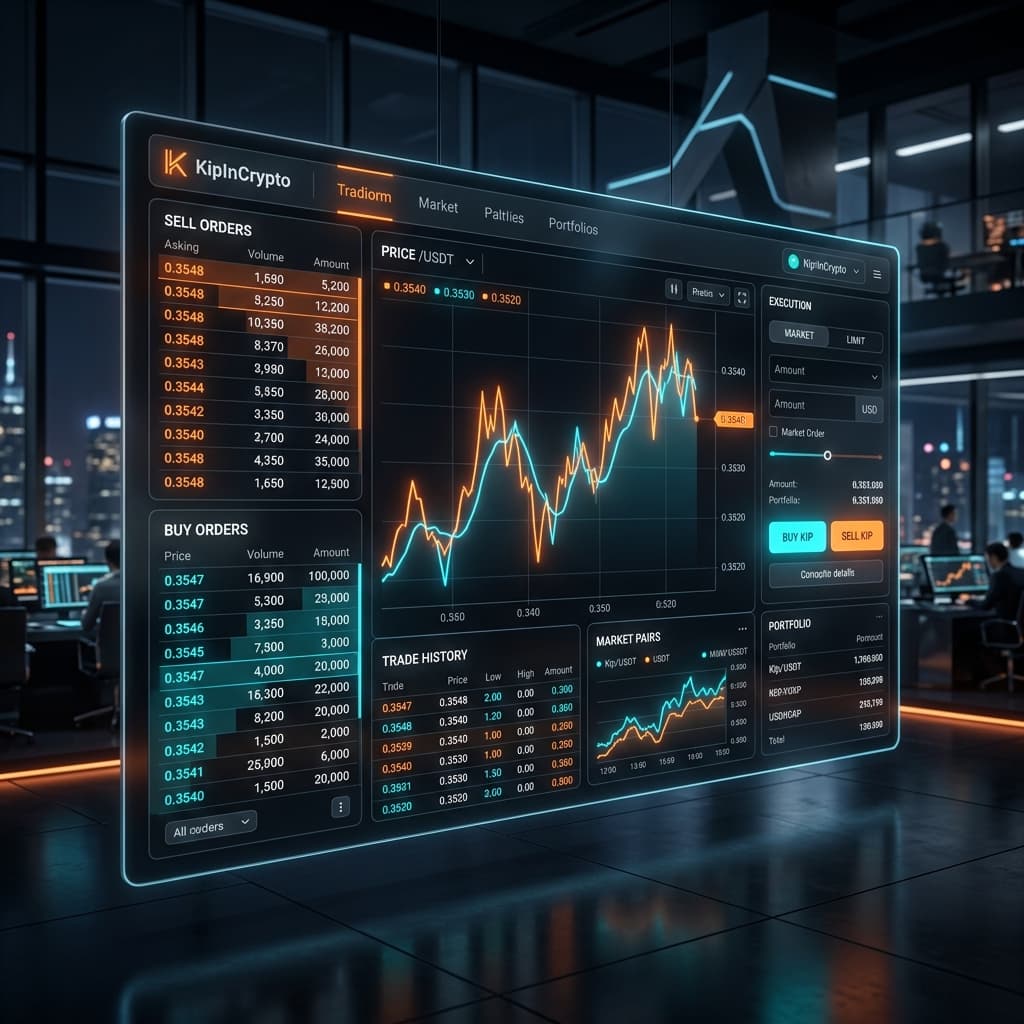
Slippage, is the difference between the expected price or output when a transaction is submitted and the actual result when the transaction is executed on the blockchain. The market price may change between the time a transaction is prepared and the time it is confirmed. On decentralized exchanges, users define the minimum output amount they are willing to accept by setting a slippage tolerance. If the actual output falls below this limit, the transaction is typically reversed; however, the network fee for the failed transaction may still be spent.
In decentralized finance applications, a transaction is executed in accordance with smart contract rules via a call signed by the user. The interface merely facilitates this process; the actual authority lies with the contract address and the granted token permissions. The fact that a protocol operates on-chain does not mean the contract is error-free or that the economic model is secure. Users must distinguish between risks related to price, liquidity, the contract, the oracle, the administrator key, and network fees.
What Is the Purpose of Slippage?
A slippage limit is used to prevent a user from executing a trade at a price significantly worse than expected under rapidly changing market conditions or low liquidity. A very low tolerance can lead to frequent trade failures, while a very high tolerance can increase the risk of poor pricing and attacks. The appropriate level depends on the token’s liquidity, volatility, transaction size, transfer fee, and network congestion. The interface’s automatic recommendation should not be considered ideal for every token and every market condition.
The practical implication of this feature is that different participants on the network may use the same concept for different purposes. The end user monitors the transaction outcome and cost; the developer monitors the protocol interface; the node operator monitors validation conditions; and the service provider monitors operational and custody responsibilities. These perspectives are interconnected but not identical. To gain a sound understanding of the concept, one should refer not only to the brief description on the application screen but also to the network’s technical documentation and verifiable on-chain data.
How Does Slippage Work?
When a user creates a swap order, the router calculates an estimated output based on the current pool state. Until the transaction is included in a block, other users’ swaps may alter the reserves. The minimum output is determined by subtracting the slippage tolerance from the estimated amount. If the output calculated on-chain falls below the minimum, the smart contract cancels the transaction. This price slippage is distinct from the price impact caused by the user’s transaction: price impact refers to the direct effect of the order size on the liquidity pool curve, while slippage is the difference between the expected and actual outcomes.
Since the operation may vary from network to network, it should not be assumed that the same term follows exactly the same rules across different protocols. Block time, finalization model, fee system, transaction data structure, and administrator permissions can all affect the outcome. Additionally, there may be a difference between how an interface labels a transaction and the technical action that actually occurs on the chain. Verifying the network, contract, fee balance, and expected output before signing a transaction is a fundamental security step.
Key Elements and Use Cases
On the slippage screen, the estimated output, minimum amount to be received, price impact, protocol fee, and network fee should be reviewed separately. Since some tokens apply taxes or burn mechanisms during transfer, a transaction may fail with the standard low tolerance; however, increasing the tolerance does not guarantee the contract’s reliability. Limit orders or custom order routing systems can reduce slippage under certain conditions. Splitting large orders may sometimes reduce price impact, but it can also result in higher network fees and additional price risk over time.
- Estimated output is the expected result of the transaction calculated using current pool data.
- The minimum output is the lower limit the user will accept after the slippage limit is reached.
- Price impact and slippage may be related but are not the same concept.
When evaluating the scope of the concept, the data source and measurement time must also be specified. On-chain values can vary from block to block, market indicators can change within seconds, and protocol parameters can change due to governance or software updates. A screenshot or a single-period rate should not be presented as a long-term characteristic. If a comparison is to be made, the same network, the same time frame, and the same calculation method must be used; gross values should not be confused with the net result after fees and risks.
Risks and Common Misconceptions
A high slippage limit can leave the door open to sandwich attacks and significant value loss, especially in low-liquidity pools. Malicious tokens may impose excessive fees during sales or allow sales only to specific addresses; a high tolerance does not resolve this fundamental issue. Gas fees may still be incurred even if the token is not spent when a transaction fails. Displaying values in basis points or as a minimum output rather than as a percentage in the interface can lead to user error. The actual minimum amount must be carefully reviewed before signing.
A common mistake is interpreting a technical term as a price direction or a guaranteed profit signal. Network activity, supply rules, trading volume, or the displayed reward rate do not, on their own, determine future market outcomes. Another mistake is assuming that assets with the same name and symbol, or services using the same terminology, are equivalent. Transactions conducted without verifying the correct network, contract address, client version, storage method, and authorization model may result in irreversible losses.
How Should Slippage Be Assessed?
Slippage tolerance is not a return adjustment but an execution limit. A low tolerance may be sufficient when the market is calm and liquidity is deep; the need for tolerance may increase during rapid price movements or in markets with low liquidity. However, acceptable slippage varies depending on the user’s trading objective and order size. Users should first verify the correct pool, token address, and price impact; they should not increase the tolerance solely to force through a failed transaction. For large amounts, it is important to compare alternative routes and markets.
During evaluation, official protocol documentation, open-source code repositories, reliable block explorers, and independent security audits can be used together. The publication date of the sources and the network version they describe should be verified. Especially after protocol upgrades, outdated educational content may not reflect current operations. If a service’s claims do not align with the permissions verifiable on-chain, technical data should take precedence. Private keys and recovery phrases should never be shared during any research or support process.
Related Concepts
The concepts of automated market makers, liquidity pools, gas fees, and smart contracts complement the technical and economic context of slippage.