
What Are RWAs? How Do Tokenized Real-World Assets Work?
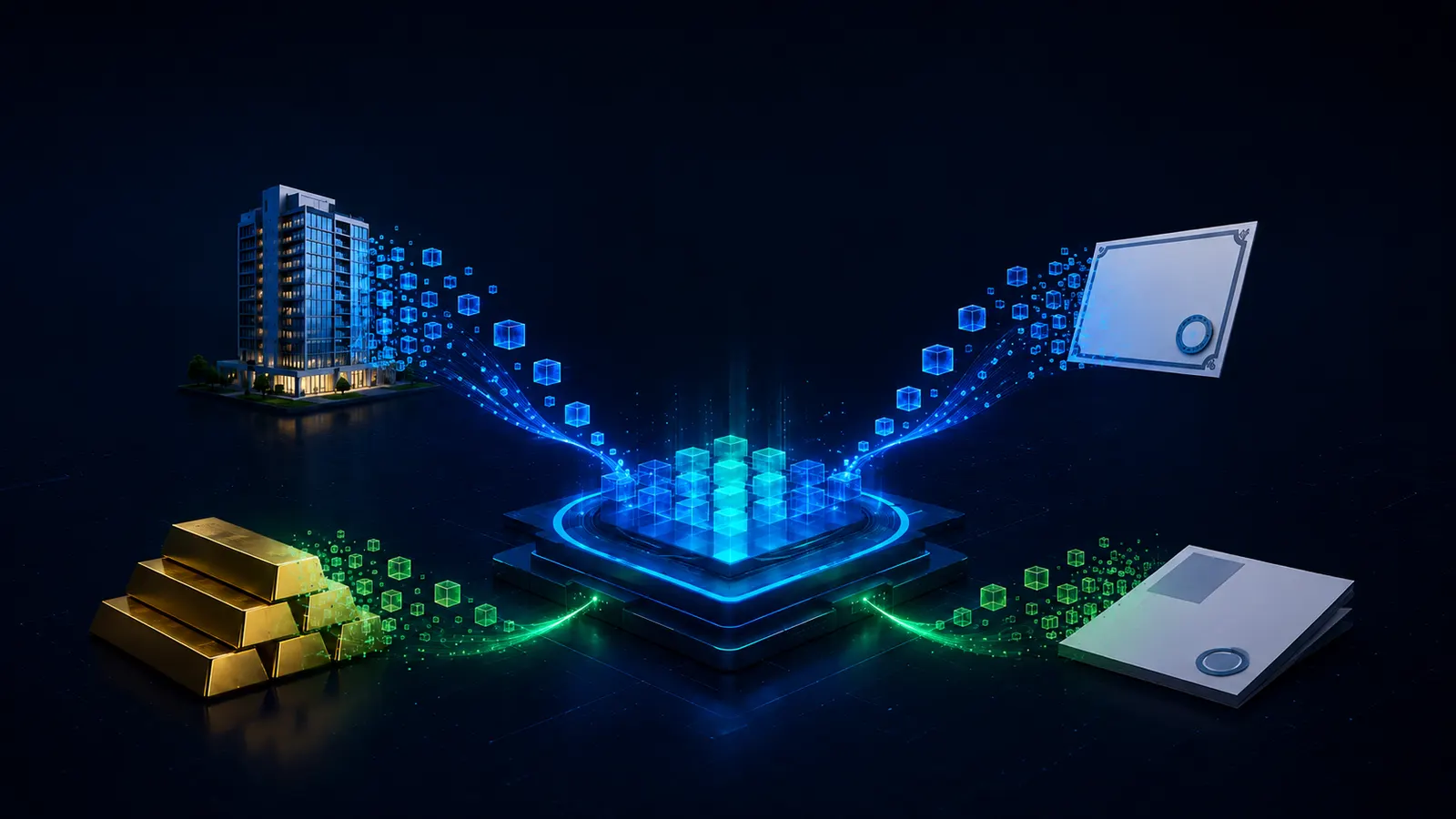
RWA stands for “real-world asset.” It is a broad term for assets and economic rights that exist outside a blockchain, including real estate, government bonds, private credit, bank deposits, commodities, fine art, fund interests, invoices, and intellectual property. Real-world asset tokenization is the process of representing ownership, a claim, a share, or economic exposure to such an asset through blockchain-based tokens.
Tokenization does not magically move a physical asset onto a blockchain. In most structures, the blockchain records a token representing a legal right, contractual claim, certificate, or entitlement connected to the asset. For that reason, evaluating an RWA token requires more than reading its smart contract. The issuer, legal structure, custodian, audits, data sources, and redemption process are equally important.
This guide does not provide investment advice. Its purpose is to explain the technical and legal layers of RWAs, show what a token may represent, describe how tokenization works, and identify the checks users should perform before interacting with an RWA product.
What is an RWA?
An RWA is an asset or right with economic value that did not originate on a blockchain. Bitcoin and Ether are often described as onchain-native assets because they are created and accounted for within their respective blockchain systems. A building, gold bar, government bond, or trade receivable exists outside the blockchain. When a token is created to represent ownership of or a claim on that asset, it becomes part of an RWA structure.
For example, an issuer may tokenize the economic value of bonds held by a regulated custodian. Depending on the product terms, a token holder may be entitled to a share of the bond income or may be able to redeem the token for cash. In another structure, the property itself may not be tokenized directly; instead, tokens may represent shares or debt issued by a special-purpose company that owns the property.
This distinction is essential. A token may be integrated into the official ownership record, represent a contractual claim against an entity that holds the asset, or provide only synthetic exposure to the asset’s price. The statement “this token represents a building” does not explain which legally enforceable rights the token holder actually receives.
What does asset tokenization mean?
Asset tokenization converts rights connected to an asset into programmable digital records. A token may represent a specified amount of gold, a fund unit, a debt instrument, a share of rental income, or another economic entitlement. Because tokens are recorded on a blockchain, transfers can be tracked on a shared ledger and controlled through smart contract rules.
Dividing an asset into smaller token units is often called fractionalization. A single asset might be represented by one million equal tokens. Technical divisibility, however, does not automatically mean that the units may be sold freely in every jurisdiction or that each holder becomes a direct owner in a land registry. The legal documentation and official records must support the rights represented by the tokens.
The word tokenization is also used in data security, where sensitive information is replaced with a non-sensitive token. RWA tokenization has a different purpose: it creates a blockchain-based digital representation of an asset or legal right.
How do tokenized real-world assets work?
A reliable RWA system consists of more than a smart contract. It must create a trustworthy link between the offchain asset and the onchain token. That link is usually formed through an issuer, legal agreements, a custodian, auditors, data providers, identity controls, and a redemption mechanism.
The main stages of RWA tokenization
- The asset is selected: The issuer identifies the real estate, bond, gold, loan receivable, or other right to be tokenized. Ownership, valuation, transferability, and existing restrictions are reviewed.
- A legal structure is established: The documents define what the token represents. The asset may be owned directly by the issuer or held through a fund, trust, custodian, or SPV. An SPV is a special-purpose vehicle created to isolate a particular asset or transaction within a separate legal entity.
- The asset is placed in custody: Physical gold may be stored in a vault, securities may be held by an authorized custodian, and real estate may be owned by the relevant company. Records and audits are used to reconcile the token supply with the underlying asset.
- The smart contracts are created: The contracts define issuance, transfers, burning, freezing, redemption, and administrative permissions. Depending on the product, an issuer may use ERC-20, ERC-721, or a compliance-focused standard such as ERC-3643.
- Identity and eligibility checks are applied: Regulated products may require KYC, anti-money-laundering checks, geographic restrictions, or accredited-investor status. Many RWA tokens are therefore permissioned rather than freely transferable.
- The tokens are issued: The contract mints the approved number of tokens and distributes them to investors, platforms, or authorized intermediaries.
- Offchain data is delivered onchain: Oracles and reporting systems may update asset prices, interest rates, collateral levels, payment status, and reserve information.
- Income and corporate actions are managed: Interest, dividends, rent, maturity payments, voting, splits, and other events may be processed manually or through smart contracts.
- Redemption takes place: When the holder meets the product requirements, the tokens may be returned to the issuer in exchange for cash, securities, commodities, or another contractually defined asset. Redeemed tokens are commonly burned.
Does an RWA token provide legal ownership of the asset?
Not necessarily. The most important question in RWA analysis is what the token legally represents. Possession of an onchain token may not, by itself, create enforceable title to real estate, securities, gold, or another underlying asset.
In an issuer-sponsored token model, the owner or authorized agent may issue the token and connect blockchain transfers to an official ownership record. In another model, a third party may issue a security or certificate representing a claim against assets held elsewhere. Some products offer economic exposure linked to an asset’s price without granting ownership or redemption rights in the referenced asset.
Users should determine which legal entity owes them an obligation, whether the underlying asset is segregated from the issuer’s creditors, what happens if the issuer becomes insolvent, and which record takes priority if the blockchain and the official register disagree. These answers are usually found in offering documents, custody agreements, terms and conditions, and applicable law rather than in the token contract alone.
Which token standards are used for RWAs?
ERC-20 is Ethereum’s most common standard for fungible tokens. If every unit represents the same class of bond interest, fund share, or commodity entitlement, an ERC-20-style structure may be suitable. ERC-20 defines standard transfer and allowance functions, but it does not independently solve identity verification, securities compliance, or offchain enforceability.
ERC-721 and other NFT standards can represent unique assets, certificates, property records, or individual works of art. Some structures combine an NFT representing the primary asset with fungible tokens representing fractional economic interests.
ERC-3643 is designed for permissioned and compliance-oriented tokens. It can incorporate identity registries, eligibility checks, and transfer restrictions into the smart contract architecture. Only wallets that satisfy predefined conditions may be permitted to receive or transfer the token.
A token standard does not prove that a product is legitimate. Two projects may use the same standard while only one has enforceable documentation, verified custody, and accurate reserves. The contract address, upgrade mechanisms, and administrator permissions can be reviewed through KipInCrypto Contract Check, but technical analysis cannot replace verification of legal rights and offchain assets.
Why are oracles, custody, and reserve verification important?
A blockchain cannot independently observe how much gold exists in a vault, whether a borrower made a payment, or whether a property valuation has changed. Trusted systems must deliver this offchain information to the blockchain. Infrastructure that provides external data to smart contracts is generally called an oracle.
Oracles may supply prices, interest rates, valuation data, payment status, or reserve balances. Incorrect, delayed, or manipulated data can distort collateral calculations, redemptions, and secondary-market prices. Users should examine who supplies the data, whether multiple sources are used, how frequently it is updated, and what happens when the feed fails.
Custody describes who holds the underlying asset and under which legal conditions. When the issuer and custodian are the same entity, counterparty risk may become concentrated. Independent audits, reserve reports, and proof-of-reserve systems may improve transparency, but users must still check the scope, date, liabilities, methodology, and independence of each report.
What are the potential benefits of RWA tokenization?
- Programmability: Interest payments, distributions, transfer restrictions, and redemptions may be automated through smart contracts.
- Faster settlement: Ownership records, transaction instructions, and payments may be combined on shared infrastructure, reducing reconciliation work.
- Fractional access: High-value assets can be represented through smaller economic units.
- Traceability: Token transfers can be observed on a shared ledger, although offchain ownership and liabilities still require verification.
- Interoperability: Compatible tokens may integrate with wallets, custody systems, exchanges, and financial applications.
- Collateral use: Legally and technically eligible tokens may be used as collateral in certain onchain financial applications.
These benefits are not automatic. Liquidity depends on active buyers and sellers, faster settlement depends on legal and payment integration, and lower costs must be measured against issuance, compliance, custody, audit, and technology expenses.
What are the main risks of RWA tokens?
Legal rights risk: If the documentation is unclear, holders may not receive the ownership or claim they expect. A blockchain transfer and a change in an official registry do not always have the same legal effect.
Issuer and counterparty risk: The value of the token may be affected if the issuer, custodian, SPV, bank, borrower, or data provider fails to meet its obligations.
Redemption risk: The token’s quoted value may differ from the amount a holder can actually recover. Redemptions may involve minimum sizes, fees, delays, identity verification, geographic restrictions, or limited payment methods.
Liquidity risk: A token may be transferable around the clock while having very few willing buyers. Onchain transferability is not the same as deep market liquidity.
Smart contract and administrator risk: A coding defect, malicious upgrade, or compromised administrator key may allow tokens to be frozen, minted without proper backing, or transferred incorrectly.
Oracle and valuation risk: Assets such as property, private credit, and artwork may not have continuous market prices. The value shown onchain may be based on an outdated model or infrequent appraisal.
Regulatory risk: Securities, funds, deposits, commodities, and payment products are governed differently across jurisdictions. Placing a product on a blockchain does not remove legal obligations.
Network and bridge risk: If a token is moved to another blockchain, the bridge, message-validation system, custody arrangement, and wrapped-token contract create additional dependencies.
How should an RWA project be evaluated?
- Determine whether the token represents the asset itself, a claim against an issuer, shares in an entity, or only synthetic price exposure.
- Verify the identities and legal roles of the issuer, custodian, SPV, auditor, administrator, and data provider.
- Review official asset records, custody evidence, reserve reports, and the dates of independent audits.
- Read the redemption terms, including minimum amounts, fees, settlement time, KYC, geographic restrictions, and payment methods.
- Inspect verified smart contract code, upgradeability, minting and freezing powers, administrator keys, and multisignature controls.
- Understand how token supply is reconciled with the underlying asset and who can authorize additional issuance.
- Check the source, frequency, and failure procedures of oracle and valuation data.
- Review secondary-market volume, spreads, and any difference between market price and redemption value.
- Read wallet allowance requests carefully and use What Is Token Approval? when reviewing spending permissions.
- Do not treat the phrase “fully backed by assets” as sufficient evidence by itself.
Frequently asked questions
Is an RWA token the same as a cryptocurrency?
Both may exist as blockchain tokens, but an RWA token is linked to an asset, right, or economic value that exists outside the blockchain. Onchain-native crypto assets originate within a blockchain protocol.
Does buying a real estate token make me an owner in the land registry?
Not always. The token may represent direct title, shares in a property-owning company, a claim on rental income, debt, or another contractual right. The legal documents and applicable law determine the exact entitlement.
Are stablecoins considered RWAs?
Fiat-backed stablecoins supported by bank deposits, cash, or short-term securities are often treated as part of the RWA ecosystem. Definitions may differ between institutions and use cases.
Why do some RWA tokens require KYC?
If the token represents a regulated security or financial product, the issuer may need to apply identity verification, anti-money-laundering checks, investor eligibility rules, and geographic restrictions.
Does an onchain token prove that the reserve exists?
No. A blockchain can show token supply but cannot independently verify physical commodities, bank balances, or official ownership records. Custody evidence, independent reporting, and audits are required.
Can every RWA token be redeemed for the underlying asset?
No. Redemption rights vary. Some tokens can be redeemed for cash, some only by eligible users, and others provide price exposure without physical delivery or direct asset redemption.
Conclusion
RWA tokenization represents rights connected to real and financial assets through programmable blockchain tokens. It may improve transfer processes, settlement, fractional access, and automation, but a functioning token does not by itself prove that the underlying asset exists or that the holder has an enforceable legal claim.
After asking “what asset does this token represent?”, users should ask how that representation becomes legally binding, who holds the asset, how data and reserves are verified, how redemption works, and which remedies remain available if the system fails. Responsible RWA analysis must evaluate the blockchain, legal, custody, data, and counterparty layers together.